Picture this: It is 3:00 PM on a Tuesday. You have been staring at a spreadsheet for four hours straight. Your neck is stiff, your eyes are tired, and your brain feels like it is running on a low-battery mode. You walk into the office breakroom, reach into your bag, and pull out a protein bar advertised as a “workout in a wrapper.” You pair it with a protein-fortified iced coffee. You tell yourself you are making the healthy choice for your body and brain.
After all, protein is the undisputed king of macronutrients, right?
If you work a white-collar job where your primary exercise consists of typing, commuting, and walking to conference rooms, the endless push to eat more protein might actually be doing your health more harm than good. Recent science is turning the “more is always better” protein rule completely on its head.
New words you will see mTOR, FGF21 & Autophagy.
A. The Great Health Myth
Walk down any grocery store aisle today, and you will see the word PROTEIN stamped in massive, bold letters across almost everything. We have protein chips, protein water, protein cookies, protein oats, and even protein-fortified ice cream.
Protein-filled perfumes and protein-fortified air conditioners are imminent! Be ready.
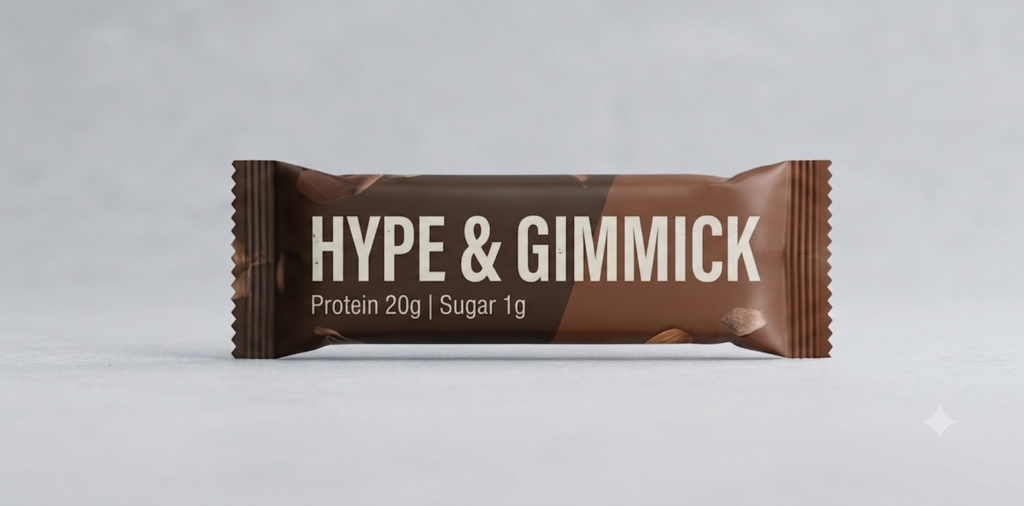
Food manufacturers have successfully convinced us that protein is a magical elixir that melts body fat, builds instant muscle, and keeps us young.
The marketing machine targets busy office workers in particular. If you are sitting at a desk all day, you might feel guilty about not getting enough exercise. Buying that protein bar feels like a quick health hack—a way to “cancel out” eight hours of sitting down.
Here is the truth: most of what you have been told about protein hype is a clever marketing gimmick.
For decades, we were taught that high-protein diets are automatically healthy for everyone, everywhere, all the time. But massive scientific reviews covering hundreds of studies on nutrition and aging tell a very different story. While active athletes certainly need extra protein to repair muscle tissue, sedentary white-collar workers are routinely overconsuming it. Eating protein-fortified processed foods while sitting in an office chair does not turn into lean muscle—it simply places unnecessary stress on your metabolic system.
B. How Protein Actually Works
To understand why the protein obsession backfires for desk workers, we have to look under the hood at how your body actually processes what you eat.
Think of protein as a house made of tiny building blocks called amino acids. When you eat a chicken breast, a bowl of lentils, or a scoop of whey powder, your digestive system breaks that protein down into individual amino acids. Your body then uses these blocks to build and repair tissues like muscle, skin, hair, and enzymes.
Unlike carbohydrates or fats, your body cannot store excess protein for later use. It cannot hoard protein in a storage tank. When you consume more amino acids than your body immediately needs for repair, your liver and kidneys have to work overtime to break down and process the excess.
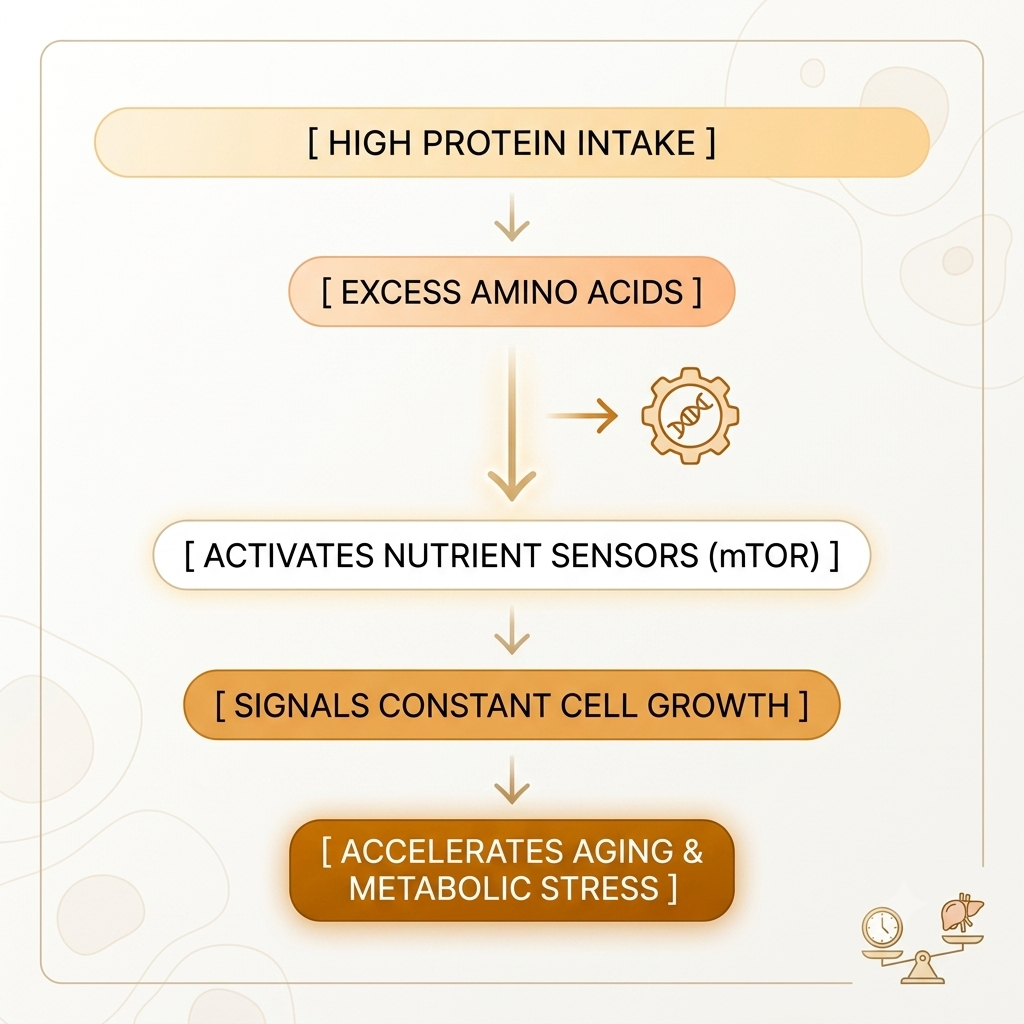
When you overload your system with specific amino acids (like isoleucine, valine, and methionine) without giving your body a physical reason to build muscle, a few biological dominoes fall:
- Nutrient Sensing Overload: Excess amino acids trigger a cellular growth switch called mTOR. When mTOR is constantly switched “ON” because of non-stop high protein intake, your cells stay in a state of rapid growth instead of switching into maintenance and repair mode.
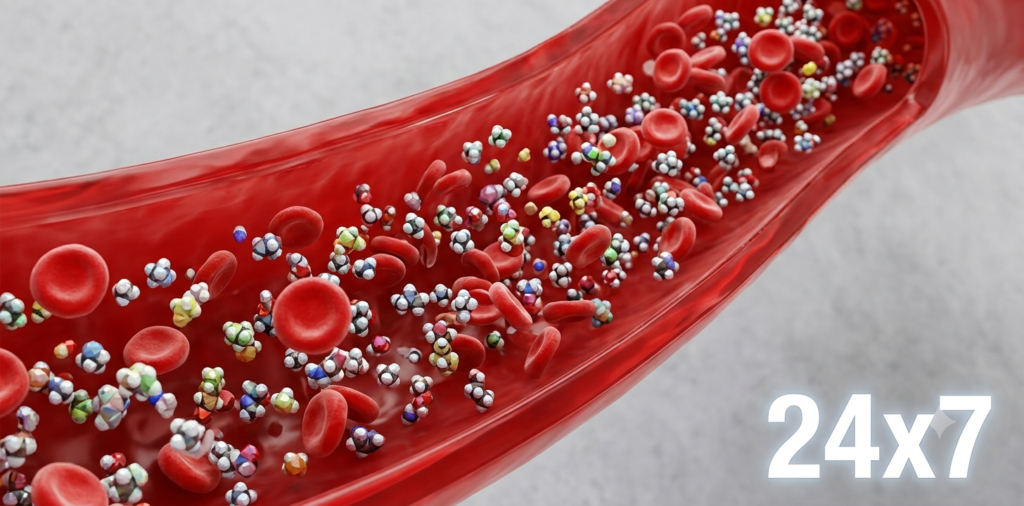
- Suppressed Longevity Signals: Consuming moderate to low protein stimulates a beneficial hormone produced by the liver called FGF21. This hormone helps lower inflammation, regulate blood sugar, and clear out cellular waste. High protein intake suppresses this protective system.
- Cellular Clutter: Without periodic breaks from high protein intake, your cells miss out on autophagy—the internal cleaning process where cells recycle damaged parts and clear out biological debris.
C. Who Needs Protein, When, and How Much?
This brings us to the core question: if protein isn’t a free pass to health, how much do you actually need?
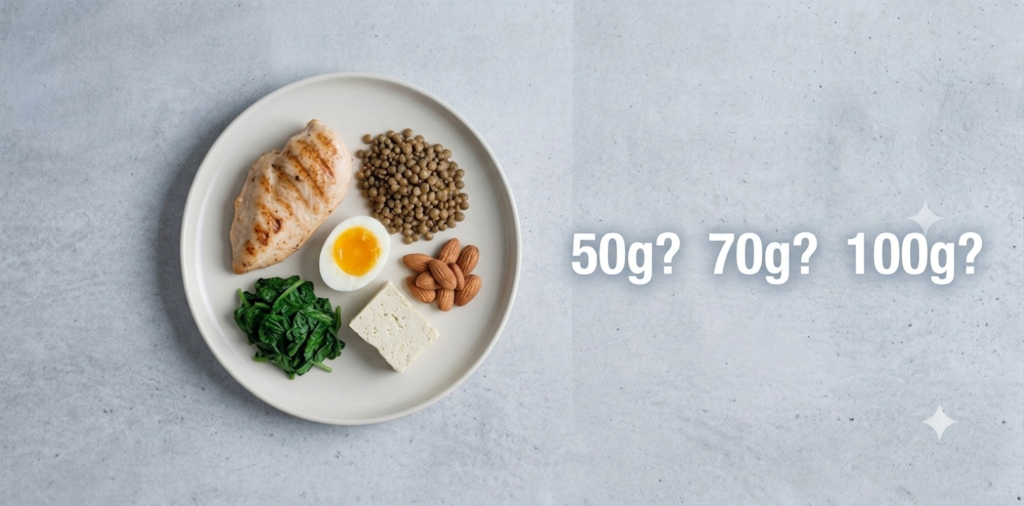
Recent dietary guidelines have pushed for higher daily protein intake—recommending between 1.2 to 1.6 grams of protein per kilogram of body weight (about 0.5 to 0.7 grams per pound). That almost doubled older baseline standards. However, landmark research shows that these high numbers only make sense if you are physically active.
The impact of protein depends almost entirely on physical context:
| Profile | Physical Demand | Recommended Daily Protein | Primary Physiological Focus |
| Sedentary White-Collar Worker | < 5,000 steps/day, no heavy lifting | 0.8 g per kg of body weight | Cellular maintenance, metabolic balance, longevity |
| Active / Resistance Trainer | Regular weightlifting or intense cardio | 1.2 – 1.6 g per kg of body weight | Muscle protein synthesis, tissue repair, recovery |
| Older Adults (65+) | Variable activity, facing muscle loss | 1.0 – 1.2 g per kg of body weight | Preventing sarcopenia (age-related muscle loss) and frailty |
If you sit at a desk from 9 AM to 5 PM, exercise acts as a “circuit breaker.” When an athlete eats protein, their worked muscle tissue acts like a sponge, soaking up those amino acids to repair micro-tears. But if you spend your day typing in a swivel chair, your muscles do not have that demand. Those extra amino acids circulate endlessly in your bloodstream, triggering growth pathways that can lead to weight gain, higher fasting blood sugar, and accelerated biological aging over time.
Don’t let this table tell you what to do, listen to your body.
D. Practical Suggestions for Desk Workers
If you work a typical white-collar job, you do not need to cut out protein entirely—protein is still an essential building block of life. You simply need to align your intake with your actual physical output.
Here are four simple, actionable tweaks you can make starting today:
- Ditch the “Protein-Fortified” Junk: Stop buying processed snacks just because they have “20g Protein” printed on the label. High-protein cookies and snack bars are often loaded with refined oils and excess calories that your desk-bound body does not need
Your food must never come from a factory! - Tie Your Protein to Your Movement: Eat your higher-protein meals on the days you actually exercise. If you go for a heavy lift or a run after work, that is the ideal time for a protein-rich dinner. On rest days spent entirely at your computer, lean into whole grains, vegetables, and healthy fats instead.
- Swap Animal Proteins for Plant Options: Plant-based protein sources like beans, lentils, chickpeas, and tofu naturally contain lower levels of the specific amino acids (like isoleucine and methionine) that drive excess mTOR signaling and metabolic strain.
- Prioritize Whole Foods Over Powders: Swap synthetic protein shakes for real whole foods like eggs, fish, curd, or mixed nuts. Whole food sources digest more slowly and come packaged with essential vitamins, minerals, and dietary fiber that support gut health during long sitting sessions.
A cup of boiled peanuts is a great snack.
soak the peanut (no shell), add some salt to water, for 8-12 hours,
Boil in a pressure cooker (4 to 6 whistles)
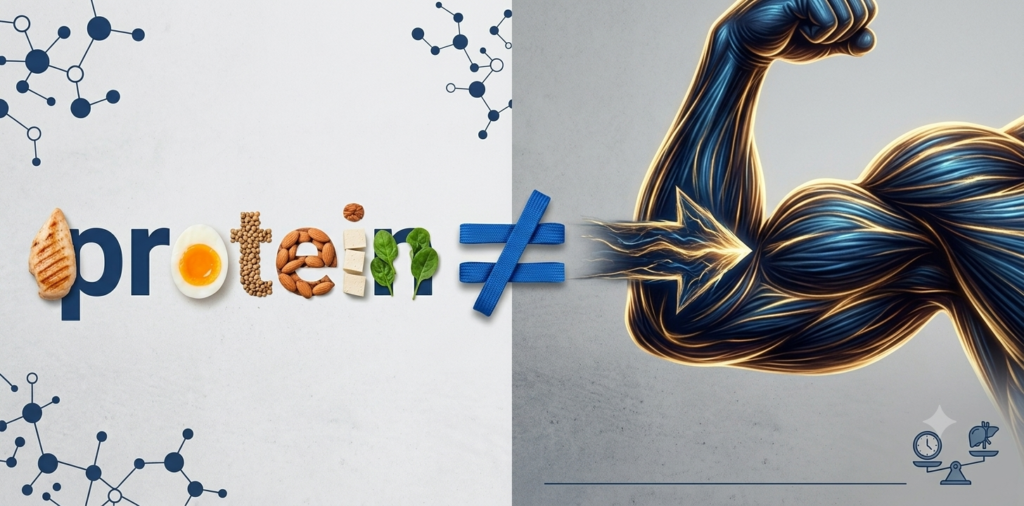
Understanding your body’s true requirements puts you back in control.
Instead of falling for clever food marketing, feed your body for the life you actually live—not the one on the protein bar wrapper.
Want to look smart in front of your protein obsessed friends? Remember mTOR, FGF21 & Autophagy
Choose health, Be you.
I will catch you in another post.

Be First to Comment